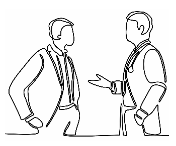
Two people want the same thing. They may want it equally or one may want it more than the other. One says the price being asked is ‘too much’, the other says it is ‘too little’. They negotiate. Traditionally each has moved his asking or bidding price nearer to the other’s. That way they reach a point somewhere in the middle of the original prices. Most negotiation is based on this, although who moves most towards the other depends on the perceived needs of both. Who judges those needs? How do they do so? If most negotiations end up somewhere in the middle, what is the skill of negotiating?
Reading people is the foundation of good negotiation.
Knowing how much you want something and how much the other person wants it is how a price is reached. Of course, you seldom know that exactly. It is why auctions are popular and achieve such high prices. In an auction people mostly don’t know the other bidders needs. Even if they know the bidders, they are unlikely to be able to read their minds. If two people badly want the same thing they will bid up the auction price, even to an absurd level.
Greed feeds ‘needs’ to the point of war. That’s true in many negotiations.
Not just greed, either. Personal pride becomes a major driver when someone thinks they have to demonstrate power. And most of us feel a need to do so from time to time. Some people, all the time. I once had a boss whose ego was such that he had an insatiable need to make people do ridiculous things, often against their own interests. One day I told the Chairman of the company I would no longer work for my boss. It was a risk but it paid off. From a career point of view it was the best decision I ever made.
Most negotiating is about pay for work or buying and selling property. The same rules about needs apply, but in these situations the buyer’s need is likely to be stronger than the seller’s. At least, that is what the buyer will think because s/he will probably be poorly informed about the seller’s situation. There is no excuse for being ill informed today. Knowing what you want is important but knowing what the other person wants is vital.
In most negotiations it is the key point.
Needs – both yours and the other person’s – change all the time, especially during the negotiation. Rethinking the outcome can make us more desperate to win – or less so. A potential employer will be reassessing his need for you second by second. Another candidate may cross his mind, or one may have dropped out of the competition. His need for you changes either way. The urgency of the work he wants you to do will also change without your knowing that it has. Your sales pitch must stay at its strongest throughout.
To negotiate successfully you must know what you want and what you will settle for. Working out your tipping point – the point at which you will give up trying to get what you want – will determine how you negotiate. If you change this point as negotiation progresses you will weaken your bargaining position. Give and take in negotiations is the lightning rod of success and failure. That doesn’t mean that you shouldn’t use it. Just be aware of the danger.
Know what your approach or style will be. You have a natural way of engaging with people. If it is suitable for this negotiation, so much the better. But it may not be. Think through the style of the other party. Take time before you begin negotiating to have an informal chat with them. Talk about something other than the negotiation. Doing so will tell you a lot about their style. You may even establish some trust between you.
Get someone intelligent and strong to run you through relevant roleplays. There is no better preparation for any communication than a tough roleplay in advance. They are raw and can be harsh but practice makes perfect. That is why they work so well.
You’re no sissy. Go for one.
Good morning
John Bittleston
Tomorrow’s Daily Paradox “So NEGOTIATE” gets to the nitty gritty of the art.
19 Aug 2024