
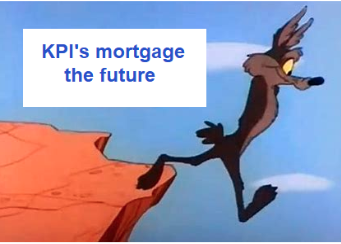
Everything we do both enhances and mortgages the future. Buy a car today and travel will be more comfortable and convenient for a few years ahead. The same spend will deprive you of capital and interest that would allow you to take more exciting holidays. We are faced with choices between priorities every waking moment. The decisions we make are often dictated by urgent need, overwhelming desire or an ingrained sense of foreboding about the future. Reason usually comes some way down the list of grounds for choice.
We put money at the top of our decision making criteria more often than not. This is because we have been taught to do so and because without it our options are severely limited. If happiness and enjoyment are our purposes in life we need money to buy at least some of them. We regard the things we buy as the most valuable things in our lives even though in conversations about it we will probably deny that. Beware the person who says ‘money isn’t everything’. They usually mean it is – to them.
Businesses have for decades been regarded as different from people because happiness and enjoyment do not feature in their purposes. It wasn’t always so. As a child I spent much of my time on farms, my parents being unavoidably absent. I observed farm labourers working to exhaustion, certainly during harvest time, but thoroughly enjoying their work, the environment, the seasons, the soil, the livestock and their fellow workers.
They were ordinary human beings, of course, apparently limited by lack of formal education. So they made their own. They turned the observation of nature into a credo that was wholly fulfilling in itself. Their beliefs were personal, not stadium public. They accepted how much they didn’t know, strove to learn more, appreciated their knowledge and knew what contentment was. The wisdom they taught me has been my rock of life.
They had targets of achievement. The farmer set the strategy, the farm hands set their own targets to achieve it. They were more committed to those targets than people are to KPIs today. They had understood the strategy because it was sensibly and simply explained to them. They decided how it was to be executed. They thus took the responsibility for quality onto their own shoulders. They were proud of their quality. Nobody ever hounded them to reduce it.
Sometimes they grumbled about their pay, sometimes they asked for more. They didn’t threaten destruction of the farm’s output or assets. They didn’t riot. They got a little loquacious after the third pint of beer in the pub, working off the hangover in the morning.
Then came the productivity team. They were needed. Populations were growing, more to feed, greater density of people created health hazards, faster communications created the need for noise. Politicians started shouting so everyone else did. Targets of achievement were set to enhance financial returns. Winner was the one who made the most, fastest. Why? They were not starving, not even deprived. ‘More means better’ they said. They couldn’t prove it.
The annual revue became half-yearly, then quarterly, then monthly, weekly, daily, hourly, continuous, never ending. Very efficient. Except for tomorrow, next month, next year, the future. They had then been mortgaged. It is cruel to quote Boeing but we must use the examples we have. The solution? Put one man in charge and the whole thing will change. Ridiculous. Some 170,000 people work for Boeing. They all have to be responsible, not just one man. But battle lines are drawn. As we all know, when you arm the troops you start a war.
And all for a ridiculous concept of a KPI.
Please can it now mean Kindly Practice Intelligence?
Good Morning
John Bittleston
What do you think? Please tell us at [email protected].
27 October 2024