If you think you don’t want to have a relationship with AI please think again. You wouldn’t flinch at my suggesting that you have a relationship with Donald Trump or Volodymyr Zelenskyy. Force majeure you are obliged to. They, however, are transient. Artificial intelligence – or, as I prefer to call it, Alternative Intelligence – is here to stay. Perhaps your retort is “Well, I am transient, too”. True, at present. I don’t think it will be for my grandchildren. I know it won’t be for my great grandchildren. AI is immortality, more so than the written word, greater than a voice recording, durable beyond any snapshot, lasting even when Picasso is forgotten.
The first rule of life is to understand the options. To educate ourselves, to stretch our ambitions, to exert a different kind of effort, to develop our confidence and, as John Steinbeck put it, ‘to grow beyond the single need’ – this is humanity. To aim high is to make the most of our time on earth. To understand our capabilities and limitations is the foundation upon which we ultimately build. Our options are seldom clear. It is our job to be clear about them.
Can AI help us understand why we are who we are, and allow us to think for ourselves who we might become? For all our human clerical expertise, such an exercise is beyond sorting and labelling. Defining and identifying are the tools of a detective, vital for capturing criminals. Sensing and feeling become insensitive and unfeeling if we measure them. They are celebrated by appreciation. Appreciation is a gift – maybe the most neglected gift of our era. Whoever fails to ‘appreciate’ denies humans the right of choice. Can AI ‘appreciate’?
If the answer were a simple ‘No’ we would understand what our problem is – as long as humans could still ‘appreciate’. Combine AI’s ever increasing ability to imitate appreciation with humanity’s seemingly ever decreasing ability to actually appreciate and you see two converging trains heading for each other on the same track. So AI logically cannot ‘appreciate’ but it gives a very polished imitation of doing so. So polished that many or most people will be convinced by it. In the process, we humans may lose our sensitivity. I think we are already doing so.
For geopolitical reasons as well as because of the growth of AI many people are saying that they cannot be bothered to consider and contribute. Each life is a right but each right is a responsibility. Humanity has never before been faced with such a need to consider its future. The development, control, use and direction of AI is critical for later generations. The opinion of every human being today decides who human beings will be tomorrow. The young and those yet to be born have always had a right to our best thoughts about the future.
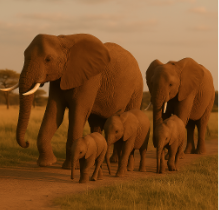
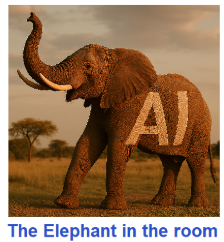
Elephants, it is said, have great sensitivity and long memories with the visible mourning of their dead and transgenerational memories of their journeys to water holes.
AI has an infinite memory.
But it requires us to supply sensitivity.
Good morning
John Bittleston
An interesting article by Paolo Benanti, a Franciscan monk, ethics professor at the Pontifical Gregorian University and technology adviser to the Vatican, in yesterday’s Financial Times reveals the developing view of AI of the Catholic Church. The late Pope Francis’s comment that we are living in a ‘change of era’ is exemplified by the fact that AI is not viewed as a danger, as was the case with Galileo’s telescope.
Your views please at [email protected]. Thank you.
15 Jul 2025