
We get some rum clients from time to time at Terrific Mentors. Occasionally they are moody, troublesome, not too bright, even argumentative! They are the spice of life for us. They have guts, believe in themselves and make their own foundations. We relish them. They often come from backgrounds of excessive discipline about the wrong things. Parents always want to be right. They can’t be all the time. None of us can. Children don’t expect it, nor wish it. They want their parents to care for them, that’s all. It doesn’t mean spoiling. It means caring.
85% of the people who are referred to us cry on their first visit. They include very senior business people, academics, retirees, children still at school, rich and poor. Why do they cry? Because there is nowhere else for them to do so. It is cathartic. Whether they work with us or not, that first experience itself starts a new phase of their life. What is it that enables this?
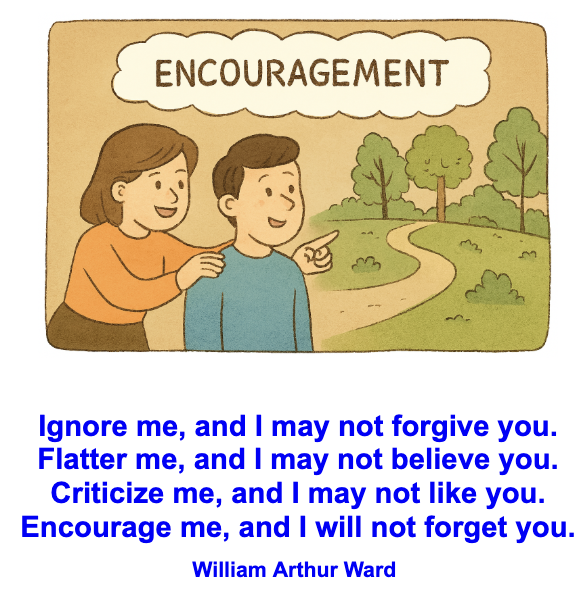
Encouragement. Sounds very simple. It works. Not just as a rescue from some dark spot they are in but as a light showing that the way ahead is not doom and gloom. And the amazing thing is that the encouragement they get is so motivational that many go on to heights they had never dreamt of. Over the years we have come to realise that encouragement is a powerful tool. You can encourage others, too.
When you do, you release a bunch of modulating pheromones, the silent architects of emotional resonance. These help us towards contact, closeness, and convivial connections that make purpose not just possible, but necessary. If that sounds a bit pompous, it is. But it’s the nearest I can get to a coherent explanation of why encouragement works.
How do you encourage someone? Obviously, look for the good points and observe what interests the person you are encouraging. Their preoccupation is themselves. You will learn a lot from listening to their descriptions of what makes them tick. Even more useful is what they think of others and of the political, economic and social situations they and the world are in. To be able to elicit this information you must be reading the other person all the time.
Their interest, mood and intellect are shuffling around nonstop. If you keep up with them they will tell you everything. Record them if you can – but always tell them you are doing so. Recording is more than keeping the details. It makes both you and others think more before they speak, highly desirable in a situation where you are trying to encourage. A little story.
She is intelligent and diligent, a great combination. She couldn’t get on with her boss. It was made clear that she is brighter than he. So bright that she could probably run the business. Once aware of these two facts she modified her handling of her boss. She won’t try to poach his job. She may never get it. But she knows she is almost doing it already. She wins.
Sounds simple. Is simple. What does it take?
Clarity and encouragement.
Get both. They are priceless.
Good morning
John Bittleston
Do you have a story of encouragement?
Please share it with us at [email protected].
07 October 2025