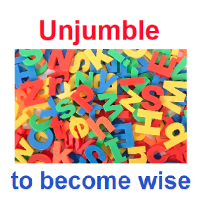
How would you answer the question “Why do you want to become wise?”
A client gave me the perfect answer last Saturday. “To get things done,” he replied. It is a response I relish. It has purpose and is brief, bold, ‘crispal’ clear. If the world got rid of the gobbledegook it is now talking and spoke about its urgent issues as simply as my client did, we would all be in a more adjusted place.
We need to become wiser.
With the tsunami upheaval in international communications we must decide what is wisdom, what part it should play in our dealings with people and how we can acquire enough of it to keep us balanced as we develop. The present divisions of the planet into competing territorial, ethnic, commercial and religious blocks are formulae for war. Challenges of climate, AI, longevity expectations and upended morality are threats to the human concept.
Leo Rogers, writing in AEON Magazine, touches the failure of wisdom when he says there is a global crisis in self-esteem. I think it is true and that it is closely related to our rejection of the importance of wisdom in our lives. We substitute self-esteem by awarding badges of success in education, sport, business, social behaviour and many other aspects of life. We even award badges for holiness, a contradiction in terms if ever there was one.
We all know, however, that the only true badge in life is conscience, the only real reward, our self-esteem. The wise also know that the failures of life are lessons and our gratitude for them, better behavior. Can we see the ever-increasing importance of wisdom as the human ability to control who we are takes over – and, seemingly, as our decreasing ability to control the environment in which we live gathers momentum?
How can we become wise again? Here are six keys towards the answer.
Watch what is happening. Not just in your immediate enclave but everywhere in the world. You have access to the best and fastest news systems ever. You must watch them for lies but even the lies have something to tell.
Interpret every change in the environment both around you and internationally. Everything that happens has a reason, a cause and an effect. You must have your own views about all of it. But they must be as well informed as possible.
Search for new information. Those who are most interested become the wisest.
Dismiss your worries when you get things wrong. Mistakes are lessons. Learn them.
Open your mind to new ideas. The curious become creative. Creativity – the ability to perceive relationships – is an essential part of wisdom.
Make other people’s lives better. Happiness is a butterfly. It alights on you because you have made someone else happy.
There it is. All we need now is a decent mnemonic to remind us of these keys.
Until we get it I suppose the above will do.
Good morning
John Bittleston
Please tell us your views on wisdom. We’d love to hear them at [email protected].
14 January 2025