By Eliza Quek, Co-Founder, Terrific Mentors International Pte Ltd, Former Chair, Research and First Vice President APAC
Introduction
When trying to help someone resolve conflicts, you only hear one side of the story. Other points of view are often not available.
Like the film ‘Vantage Point”, we need to take into account all relevant stakeholders’ views to find the root cause of the conflict, understand the complexity of multiple issues in order to optimize impact. We need to identify the key protagonists and how each contributes to the conflict.
Some coaches who are trained in mediation facilitate negotiation and acceptance by the parties of trade-offs and compromises needed to resolve the conflict. These coaches enable the parties to envision win-win-win and build sustainable trust.
Coaching individuals in conflicts
Coaches can, and do enable the individuals concerned to clarify their goals, test the extent of their determination to reach settlement; clarify their values and summon courage. They help change the lens through which individuals view the conflict, enable them to diagnose root cause and reflect on the impact and implications of deep seated biases.
Coaches enable individuals to strategically navigate emotions; strengthen self management and mindfulness; explore options and craft strategies; support implementation of action plans, review and reflection.
While the achievements are notable in that one can have impact on how an individual views and handles a specific situation e.g. face up to bullies, navigate political dynamics, assert independence; confront, initiate and engage in crucial conversations; think of how much more can be gained, if we were to enable a Maypole dance.
While engaging the parties can be a challenge, it is essential. It is the coachee’s task to decide, own and commit with courage to invite the other parties to the table.
And assuming they assent, the process and journey towards potential and amicable resolution can begin.
The Maypole metaphor
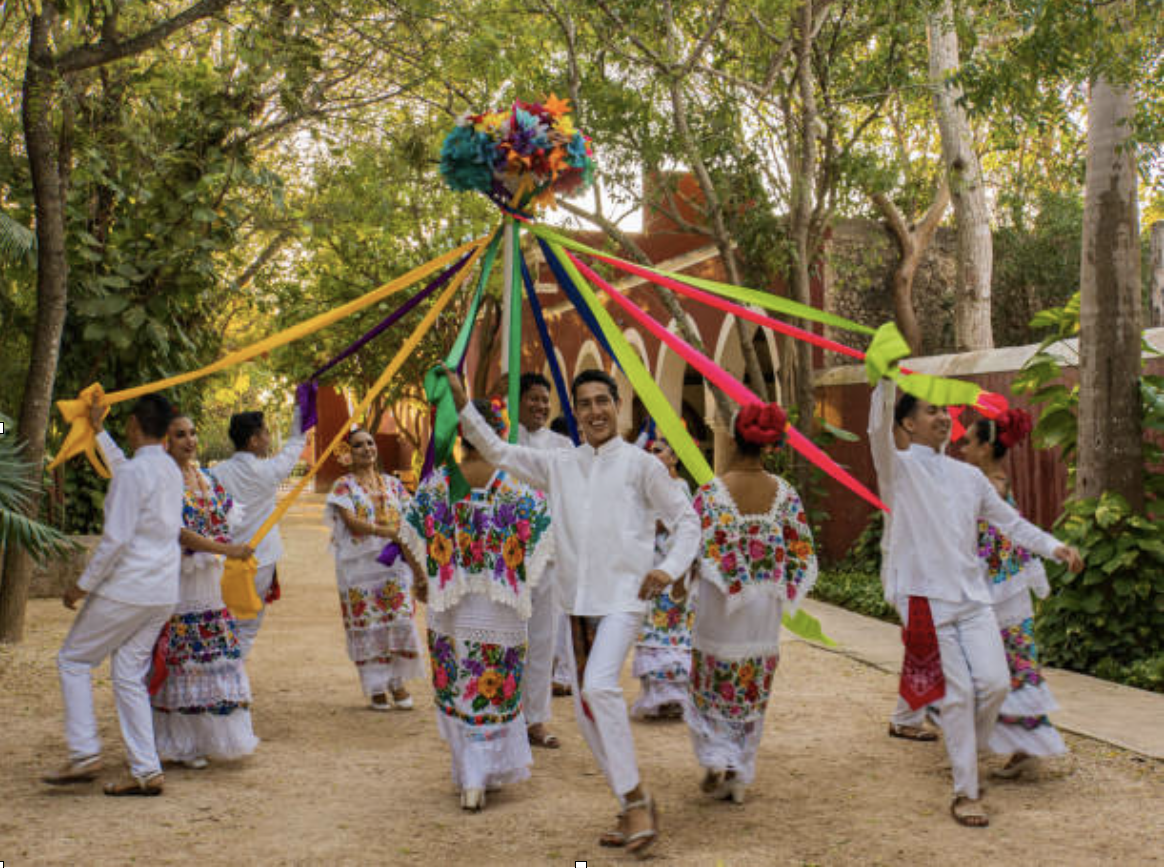
Maypole dancing may have its beginnings in “Germanic pagan customs”. It symbolizes “ the fertility of the land, intertwining male and female energy and blossoming of life”. In conflict resolution, the metaphor represents an abundance mind-set, embracing diversity of thought, creative problem solving and fruitful settlement.
Assuming that the relevant players are on board (and expecting attrition along the journey),
Phase one of the dance will be to garner each key stakeholder’s (dancer’s) view of the conflict; its history, issues (coloured ribbons), complexity, intractability and diagnosis of the root cause. Action research can be deployed productively to enable clarity of the conflict and what the parties are up against.
Phase 2 will involve group envisioning, to clarify and prioritize issues for resolution. The players will have to agree on the goals, limitations and measurable outcomes. A Group Charter will enable them to affirm values, ensure psychological safety, agree norms and how to monitor and ensure aligned behaviours.
Team building interventions can be deployed to enable participants to embrace diversity (coloured ribbons), demonstrate inclusion, build and deepen bonds. The aim is to enable participants to develop affinity bias (focus on similarities and common interests), using the Johari Window (disclose and ask for feedback) to build trust.
Phase 3 will be Imagineering – the possibilities of ‘what would happen if…’ or ‘why not…’ or ‘what’s stopping us from …’ or ‘why can’t we ..’ or “I have a dream…” Moonshot thinking can be deployed and the group can have fun exploring how life might be different for each one of them and their circles IF….
At the end of the intervention, the group will have surfaced and tested assumptions and beliefs about how life might be different and the potential benefits of changing mind-sets and behaviours. Each will decide and declare their commitment to forge ahead, recognizing the price they have to pay for change.
Phase 4 – View of the chasms. The group will share their perspectives of the chasms, underlying issues and root cause. In Maypole terms, this Phase enables the group to examine the number and colours of ribbons and extent of entanglement.
They can use any of the Matrices available to identify low hanging fruit and quick wins. These will build faith in that some aspects of the conflict can be resolved, commencing disentanglement of the coloured Maypole ribbons.
An example of a prioritization matrix by Meryle Corbett is as follows :
Phase 5 : RASCI (Responsible, Accountable, Support, Consulted, Informed).and action planning. Depending on the number and complexity of the issues to be dealt with, the group (notice that I do not use the term team deliberately) will allocate responsibilities and accountabilities to attain low hanging fruit and quick wins. Each can use RASCI to identify stakeholders to engage in creative problem solving and conflict resolution. Every member of the group, in keeping with the Team Charter, will self monitor, review and report on progress and where there is regression, support each other in iterative problem solving.
Phase 6 Celebrate often. At the sign of the slightest initial progress, it is critical to “reinforce positive shifts” through recognizing efforts made. As Sir Walter Scott said “Oh what a tangled web we weave”. Deep seated conflicts require lazer focus, unmitigated effort; agility of mind and behaviour; time, hope and grit to resolve.
The gift of Maypole dancing is the ability to deal with a myriad of issues, empathize and recognize the strengths partners bring to the table and the value of purposeful, aligned and concentrated mindfulness. Dancers are always alert to opportunities of constant change and adjustment, making space for others. It is the practice of DEI (Diversity, Equity and Inclusion) in iterative conflict resolution.
By the Author and NOT AI
29 December 2024