WFH, Working From Home, caught the imagination of many when the pandemic of Covid forced it on an unprepared world. It saved time spent in commuting, plus the costs of doing so. It enabled the ultimate flexibility, WWYL – Work When You Like – and provided the opportunity for you to wear slippers rather than winkle-picker shoes. Unless on a Zoom, you could even have your hair in curlers though I never availed myself of this unusual opportunity.
Yes, WFH was a new dimension to employment. It also provided opportunities for the less scrupulous to evade work and avoid the furrowed frown of the boss. Friday first became half Saturday, then all weekend. The disciplines of office communications were relaxed while the politics of office gossip were exacerbated by email and the growing social media. It is true to say that WFH soon became ‘Who Failed, How?’.
Social media have already shown that the best communication is F2F, Face to Face. The screen is a voyeur’s medium, good for issues, poor for intuitions. To understand people you must BTM (Breathe Their Mood), something between a handshake and a kiss. Like you, I care about the people I deal with. I want them to care about us too. F2F can be caring.
The troubles with the office concept are many. Chief among them is bullying. If you suffer from that, or know someone who does, read ‘How to handle a bully’*, a Daily Paradox on the subject. Also high on the list of office problems is predation. Some men need to prove their manliness with excessive enthusiasm. No matter what the reason, unwanted attention is always tiresome. There are deep seated problems associated with it for both women and men. A calm and rational approach will often stop it. If that fails, report it. No company in its right mind will ignore such a complaint today. If it does, report the company.
People are losing their vocabularies and their ability to handle social contact as a result of social media. In Sweden they have had success with a 20-minute break called FIKA for everyone twice a day. Collectively the employees chomp and chat for a short while and regain their social balance – at least to some extent. Not every office system is capable of handling this but worth a try if you can do it.
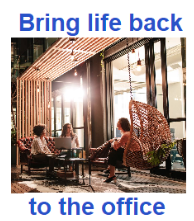
Pay more attention to the comfort of the office, not to make it a bed of relaxation but to make it less stressful and austere. Office is always something of a home from home just as home is usually a bit of an office, too. The best work is achieved by making both doable, not by keeping them rigidly apart. And within the boss’s office please stop sitting behind the barricade called a desk. You aren’t going to shoot your colleagues and you hope they won’t shoot you either. Protective barriers imply the opposite.
Try to create a collaborative pad where colleagues are stimulated to speak up, be creative and take risks. How you cope with their suggestions will, of course, be the main way to achieve this but a decent surrounding helps too.
And here we hit the head of the DON – the Decent Office Nail. It has little to do with layout, furniture, crockery or decoration but a lot to do with the boss. A good boss understands that all communication is a form of seduction – persuading someone else to do something you want done. It succeeds when the person receiving the communication understands it, accepts it, acts on it and is proud of it as their own accomplishment. It fails if shown as the communicator’s success.
Rule One of being in charge is ‘always credit success to others, never to yourself’.
Good bosses know to care about their colleagues more than about themselves.
Good morning
John Bittleston
A very Happy Chinese New Year of the Wood Snake to all our readers
Views and comments always welcome at [email protected].
30 January 2025