You can see a short summary of Human Development here.
Between two and three million years ago the human brain began to develop significantly. We started making and using primitive tools in order to get organised. The Stone Age had started. Homo Erectus developed over the next two million years. During that time we began to understand survival, comfort, social engagement and interdependence. Homo Sapiens started evolving, migrated beyond Africa, and society, roughly as we conceive it now, began to be structured to maintain a balance that would form the basis of a world we achieved between the end of WWII and the start of the 21st Century. World population grew fast but we could maintain reasonable stability. We knew others lived elsewhere but we lived at home.
Inventive progress since the Atomic Bomb has gathered pace and become faster and more complex than we ever imagined. Our comfortably structured institutions and systems have failed to keep pace with the engagement of our mechanically creative abilities. It means that the voter in democratic societies and the non-voter in authoritarian societies both feel their bosses are dragging their feet over controlling, marshalling and benefitting them from what is available. Because interpersonal communications are now so easy people can tell each other this daily. In the process they incite agitation for more agile and better governance.
They understandably seek fairness, too, though fairness is a developing concept currently abandoning ‘class’ as a criterion for entitlement in favour of wealth. Neither has proved encouragingly successful.
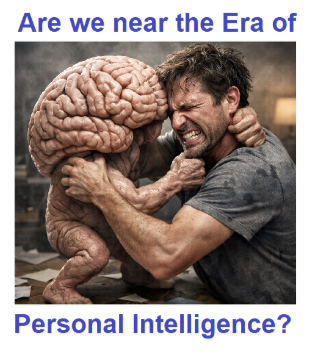
The individual must now equip his or her intellect with the judgment necessary to make their own decisions and the discipline to stick to the rules in a rational rather than a rote routine. As was pointed out – originally by Confucius, I think – the way to achieve this is by understanding knowledge well enough to reflect on how to apply it sensibly. Imitation and experience, the other two ways to discover wisdom, are poor substitutes for a competent brain. Experience can even be dangerous, too. What applied in the past is no guarantee of what will apply in the future.
The fastest computer we have is our brain. Modesty may deter you from ascribing that to yourself. If it does it is a false modesty. You may be lazy about thinking but the brain will remain available for speedy conclusions any time you want to make them. The brain has other benefits. It enables you to make judgments, to have a sense of good & bad / right & wrong. It allows you to behave in a way that helps other people – and, in doing so, helps you. No machine, however fast, can do these things itself. But quantum computers can produce imitations of the thinking and the behaviour that can kid even the smartest of us to believe they are people.
If you find yourself having a disagreement with AI and it is being dogmatic about what it is telling you, pause for a moment. Then say “That’s not what your brother told me yesterday”.
I think you’ll find that poses a nice little problem for it.
Good morning
John Bittleston
16 June 2026