
We should not allow either a leader or ourselves to run amok. Doing so is an indictment of the current political and social system. A leader is vital both practically, to get things done, and symbolically, to illustrate standards. Divine Rights of leaders were abolished years ago. We do not want them back. Yet we might seem to be reinstating them. Why?
Fear is the quick answer. Fear that if we hit an iceberg it will be deemed to be our fault. So we lever the responsibility onto someone so high up that it misses us if disaster strikes. That way the Captain goes down with the ship and everyone else is forgiven – or, at least, forgotten. Ridiculous. What actually sank any ship was negligence, Ours, not just the Boss’s.
Canadian Prime Minister Mark Carney is the leader who eased the world round the latest TwizzleFiddle Corner. As Vaclav Havel said in his 1978 treatise ‘The Power of the Powerless’, true power lies in refusing to play along. When individuals reject falsehoods and live authentically, they expose the system’s fragility.
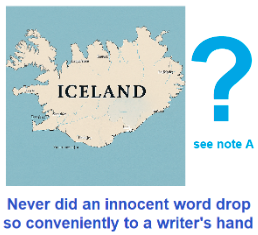
The Twizzler is so unpredictable that such ideas could be premature, even dangerous. His TwizzleFiddles are notorious – and, as torches of terror, not without success. A brilliant Ganesh article in the Financial Times on the volatility of Receding Powers says much to remind us that decline is a painful process (note B). Whether geopolitical or personal, it scars the subject’s tissue so that the blemish is seen as clearly in Minneapolis as in “Iceland”.
Having lived through the decline of the British Empire – “the sun never sets” – I saw pain of demotion in all its horror – including attempted suicide (Brexit).
Big international issues become even more painful when they relate to us failing a promotion or retiring from a lofty title in an admired organisation. Personal confidence and personal ego are close cousins. Half-truths perpetrated in periodic appraisals leave us with a sense of OK if not exactly ecstatic. The icy truth of Exit dispels any comfort they may have engendered. ‘Where do I buy paperclips?’ is a question most have to ask sometime.
Personally there are ways in which we can deal with this ‘enigmation’ (note C).
Most important of these is to realise that our successes are not who else we conquer but what we make of ourselves. As always, this must be in moderation. Excessive self-adulation is as bad as tedious self-indictment. We must modestly know who we are, temperately try to improve it and wisely understand that legacy isn’t what we leave behind but what others pick up. When we achieve those things we have become a human being.
In times like today, when the world is in strife, we can make a significant contribution if we handle decline with dignity and stature. People who command themselves well soon realise that the bright future is at hand. Only blindness and weakness prevent us from seeing it.
In fact it is here already.
Good morning
John Bittleston
Note A: Iceland was mentioned a number of times in the 2026 speech by the President of the United States to the Davos World Economic Forum. Presumably by mistake. Or not?
Note B: Financial Times 22Jan26.
Note C: Enigmation: A living riddle; the unfolding of mystery as both process and presence. It is the moment when clarity dissolves into paradox, and paradox itself becomes a form of guidance. Enigmation is not simply an enigma—it is the act of being drawn into mystery, where the unknown reveals itself as a pattern of meaning, half-hidden and half-shown.
26 January 2026