
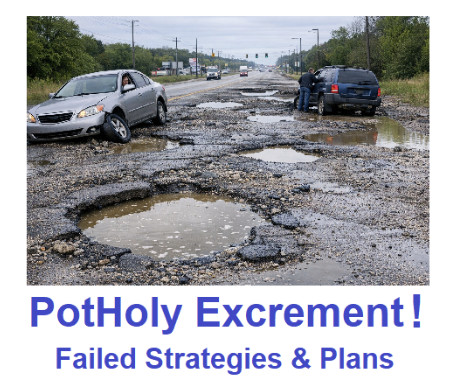
There’s something wonderfully ironic about inventing the self-driving, long-distance, solar-pannelled, silent electric car while letting the roads become impassable because of potholes. The ineffable logic of laying the railway track before despatching the Bullet Train seems to have escaped some of the world’s most self-congratulatory leaders. It’s rather the same as needing to be clear about why you go to war before doing so. These and similar problems arise because of increasingly short-term thinking.
Even if we don’t pray for tomorrow and its needs, we certainly ought to plan for them.
Who might do that? Clearly not the Leaders I have already referred to. They are mostly preoccupied writing obscenities on TikTok and thus establishing their legacies. Clearly not the mass Media. They are there to sell emotive disasters, real and anticipated. Clearly not Committees, they are taught to debate, not to agree. Strategising and Planning for the future is systematic, methodical, plodding. Sometimes boring.
The uncertainties of today’s world with its climatic nightmare and its technological rat race are driving people to seek an existence beyond our planet, a time after our death. Most of that still requires Faith – the strongest driver of human determination yet discovered. The time is rapidly approaching – and in the case of AI has already arrived, for certain aspects of life – when we will become the proof of our own beliefs. In other words we will create ourselves specifically, more than we have ever been able to before. That is now staring us in the face.
For almost two centuries we have been claiming a need for speed. Our frenetic pace is now dangerous. It’s the wrong pace. It is a pace to consume, not a pace to enjoy. Were it the latter we would examine the sunset to help plan the treasures of tomorrow not cast envious glances to see if we have accumulated more possessions than our neighbour today.
A shiny car is no prize on a holey road.
Planning is setting realistic goals to achieve a defined outcome by explaining strategies and deciding priorities. We teach adaptive versions of it – urban planning, education planning, AI planning and so on. That is good. But we also have to decide who does what, and that demands that we distinguish between strategy and tactics. Strategists becoming tacticians mould the strategy to suit the wind. So bitumen shortage becomes pothole promotion.
The strategists of our age have become tacticians, leaping from one pothole to another. In their anxiety to compensate for road maintenance disasters, they build new runways at city airports. Airline shares rise, urban revenues to mend potholes fall, and cars go out of fashion. The cycle repeats, and the future is neglected.
May God bless those who daily don the cloak of thought about the future. For without them, our strategies will fail, our plans will falter, and our roads – literal and metaphorical – will remain impassable.
Good morning
John Bittleston
Your candid comments are more than welcome at [email protected].
1 May 2026